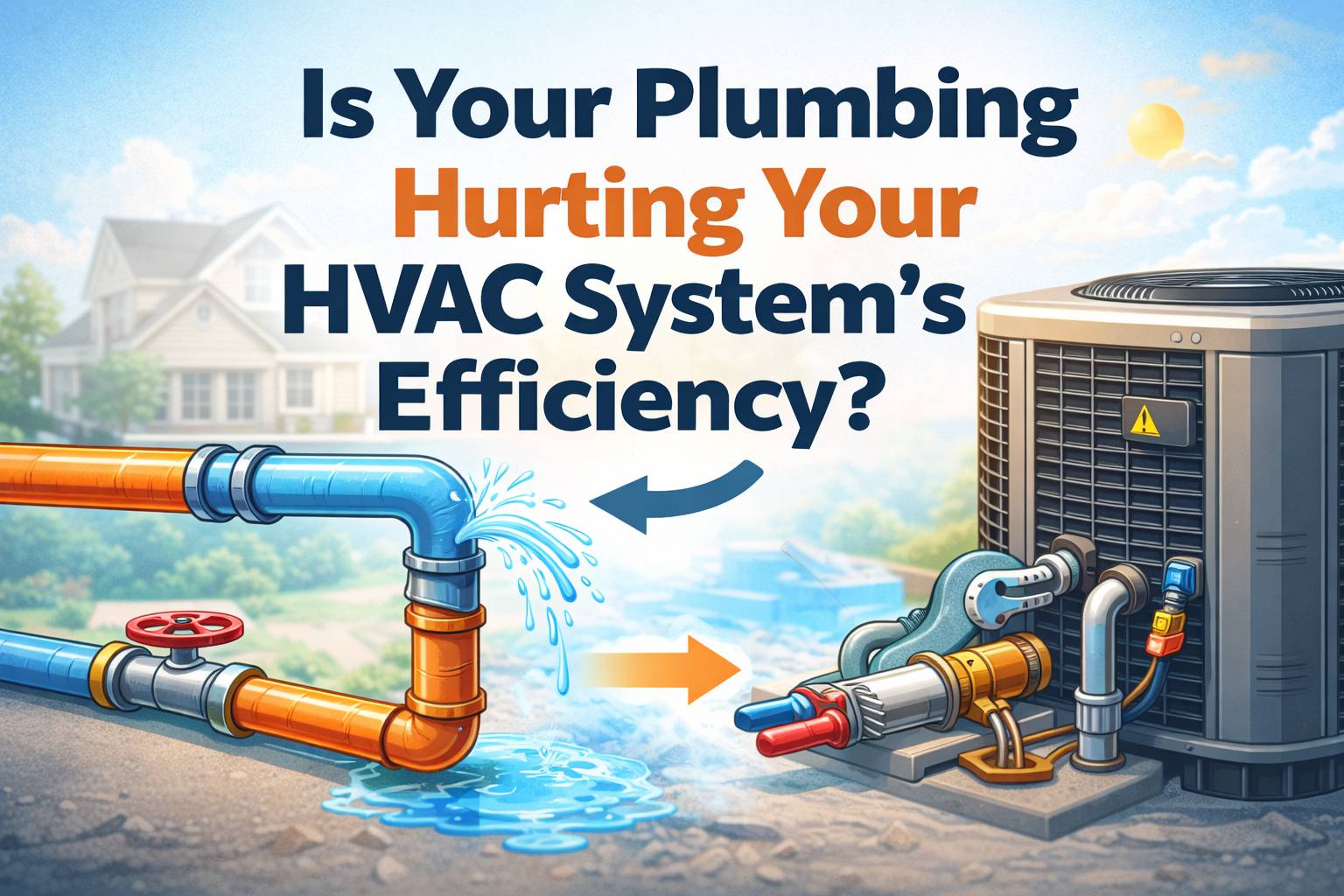
Rising energy bills or uneven indoor temperatures are not always caused by your HVAC system alone. Many homeowners focus on heating and cooling equipment while overlooking the impact of plumbing. Issues like hidden leaks, poor drainage, and excess moisture can silently reduce efficiency and put extra strain on your system. Recognizing this connection can help prevent expensive repairs and maintain better comfort at home.
The Hidden Connection Between Plumbing and HVAC Systems
At first glance, plumbing and HVAC systems seem unrelated. One handles water, the other controls temperature. But in reality, they are closely linked.
Your HVAC system relies on proper drainage, humidity balance, and in some cases, water supply. Air conditioners produce condensation, which must drain properly. Heating systems like boilers depend on consistent water pressure. When plumbing issues arise, they can disrupt these processes and reduce system performance.
This connection is often overlooked, which is why many efficiency problems go unresolved for long periods.
Common Plumbing Issues That Impact HVAC Performance
Clogged Drain Lines
Air conditioners remove moisture from the air, and that moisture exits through a condensate drain line. If this line becomes clogged, water can back up into the system.
This not only reduces cooling efficiency but can also cause shutdowns or water damage. Over time, even minor clogs can create major performance issues.
Low Water Pressure
Homes with hydronic heating systems rely on water to distribute heat. Low water pressure can disrupt this process, leading to uneven heating and increased strain on the system.
Even if you do not use a boiler, inconsistent pressure can still affect overall system balance and efficiency.
Leaky Pipes
Small leaks might seem harmless, but they can significantly impact indoor humidity levels. Higher humidity forces your air conditioner to work harder to maintain comfortable temperatures.
This leads to longer run times, higher energy bills, and faster wear and tear on your HVAC system.
How Poor Drainage Can Reduce HVAC Efficiency
Drainage plays a vital role in keeping your HVAC system functioning properly. When condensate lines become blocked or slow, moisture builds up inside the system.
This buildup can reduce airflow, affect cooling performance, and even lead to mold growth. Over time, it creates an environment where your HVAC system has to work harder to achieve the same results.
When drainage issues persist, consulting a qualified plumber in Greeley, CO can help identify hidden blockages or leaks that may be affecting your HVAC system’s efficiency.
Ignoring drainage problems often leads to bigger issues, including system breakdowns and costly repairs.
The Role of Humidity Control in HVAC Performance
Humidity is one of the most important factors in indoor comfort. Your HVAC system is designed to manage both temperature and moisture levels.
However, plumbing leaks can introduce excess moisture into your home. This forces your air conditioner to remove more humidity than usual, increasing energy usage.
High humidity also makes indoor air feel warmer than it actually is. As a result, homeowners often lower the thermostat, which further increases energy consumption.
Maintaining proper humidity levels is essential not just for comfort, but also for system efficiency and longevity.
Warning Signs Your Plumbing Is Affecting Your HVAC
Many signs of HVAC inefficiency are actually rooted in plumbing problems. Recognizing these early can save time and money.
- Uneven temperatures across different rooms
- Higher-than-normal energy bills without increased usage
- Musty odors or signs of moisture buildup
- HVAC system running longer than usual
- Frequent cycling or unexpected shutdowns
If these issues persist, it may be time to evaluate both systems together rather than treating them separately.
In many cases, working with an experienced plumber in Greeley, CO can help uncover underlying issues that standard HVAC inspections might miss.
Preventive Maintenance Tips for Both Systems
Keeping your plumbing and HVAC systems in good condition requires a proactive approach. Simple maintenance steps can prevent major efficiency losses.
Routine Inspections
Regular inspections help identify leaks, clogs, or pressure issues before they escalate.
Drain Line Cleaning
Keeping condensate lines clear ensures proper moisture removal and prevents backups.
Leak Detection
Even minor leaks should be addressed quickly to avoid humidity problems and structural damage.
Coordinated Servicing
Scheduling maintenance for both HVAC and plumbing systems ensures they work together efficiently rather than against each other.
A holistic approach to home maintenance can significantly improve performance and reduce long-term costs.
Final Thoughts
Your HVAC system does not operate in isolation. Plumbing issues—no matter how small—can directly affect its efficiency, performance, and lifespan.
By understanding the connection between these systems, homeowners can take smarter steps to maintain comfort and control energy costs. Regular inspections, timely repairs, and a coordinated maintenance plan can make a noticeable difference.
Instead of focusing on one system at a time, it is always better to view your home as an interconnected system where every component plays a role in overall efficiency.